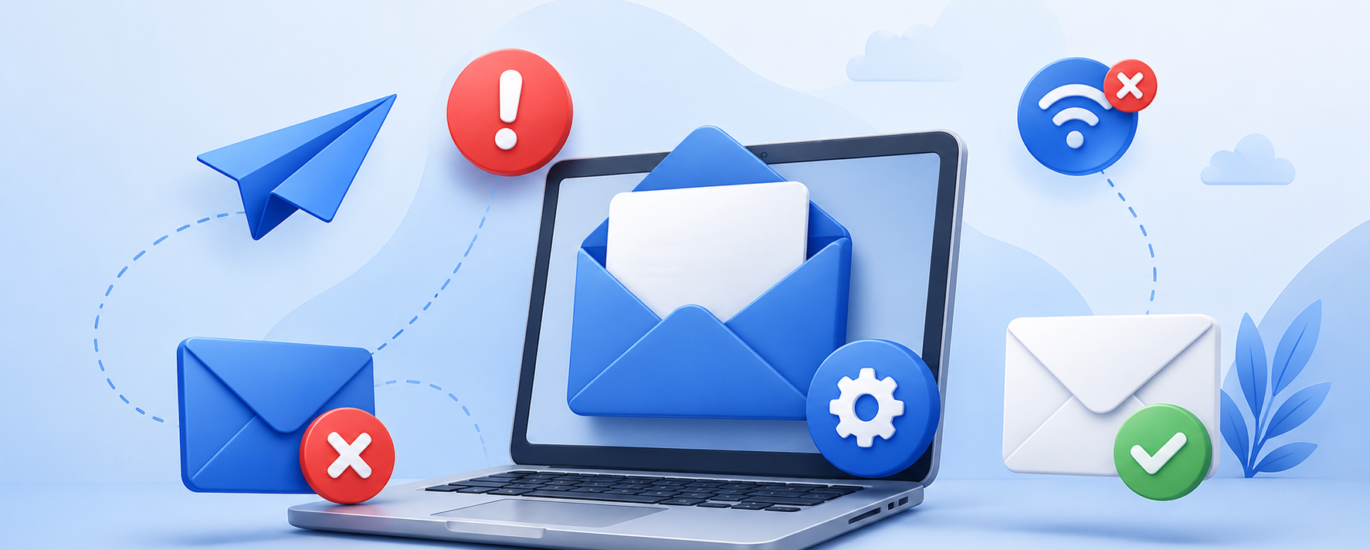
Email is one of the most important communication tools for personal, business, and professional use. However, many users face problems where emails fail to send, incoming messages never arrive, or emails get delayed. These issues can interrupt communication and create unnecessary frustration.
Understanding the most common causes behind email sending and receiving problems can help you fix them quickly and keep your email working properly.
1. Poor or Unstable Internet Connection
A weak internet connection is one of the most common reasons emails fail to send or receive. Without a stable connection, your email app cannot connect properly to the mail server.
How to Fix It
- Restart your Wi-Fi router or mobile data connection
- Check whether other websites are loading properly
- Switch to a stronger network connection
- Restart your device and try sending the email again
2. Incorrect Email Password
Using an outdated or incorrect password can prevent your email account from syncing properly.
How to Fix It
- Re-enter your email password carefully
- Reset your password if needed
- Update the password in all connected devices and email apps
3. Wrong IMAP, POP, or SMTP Settings
Incorrect server settings can stop emails from sending or receiving correctly.
How to Fix It
- Verify incoming and outgoing mail server settings
- Ensure SMTP authentication is enabled
- Use the correct port numbers provided by your email service provider
4. Full Mailbox Storage
If your inbox storage is full, new emails may stop arriving and outgoing emails may fail.
How to Fix It
- Delete unnecessary emails and spam messages
- Remove large attachments
- Empty trash and junk folders regularly
5. Emails Going to Spam Folder
Sometimes important emails are automatically filtered into spam or junk folders.
How to Fix It
- Check your spam and junk folders regularly
- Mark trusted emails as “Not Spam”
- Add important senders to your contact list
6. Large Email Attachments
Sending very large files can cause email delivery failures or delays.
How to Fix It
- Compress large files before sending
- Use cloud storage links instead of direct attachments
- Keep attachment sizes within your email provider’s limits
7. Outdated Email Application
Older email apps may contain bugs or compatibility problems that affect email performance.
How to Fix It
- Update your email application regularly
- Install the latest software updates for your device
- Reinstall the email app if problems continue
8. Spam Filters & Security Restrictions
Strong spam filters or security systems may block incoming or outgoing emails.
How to Fix It
- Disable overly aggressive spam filters
- Review blocked email addresses
- Temporarily disable firewall or antivirus software to test email delivery
9. Sync Problems on Mobile & Desktop
Email syncing issues can prevent new messages from appearing across devices.
How to Fix It
- Enable automatic email sync
- Refresh the email application manually
- Remove and re-add the email account
10. Temporary Email Server Outages
Sometimes the problem is not on your side. Email providers may experience server outages or maintenance issues.
How to Fix It
- Check the official status page of your email provider
- Wait for server maintenance to finish
- Try accessing your account later
11. Two-Factor Authentication Problems
Two-factor authentication can sometimes block login access if verification codes fail.
How to Fix It
- Ensure your phone number is correct
- Sync your authenticator app properly
- Use backup recovery codes if available
12. Browser Cache & Cookie Problems
Corrupted browser data may prevent webmail services from loading correctly.
How to Fix It
- Clear browser cache and cookies
- Try another browser or private browsing mode
- Disable problematic browser extensions
Final Thoughts
Email sending and receiving issues are usually caused by internet problems, incorrect settings, storage limitations, or security restrictions. Fortunately, most of these problems can be fixed quickly by following the correct troubleshooting steps.
Keeping your email application updated, maintaining proper security settings, and checking server configurations regularly can help prevent future email issues and ensure smooth communication across all your devices.